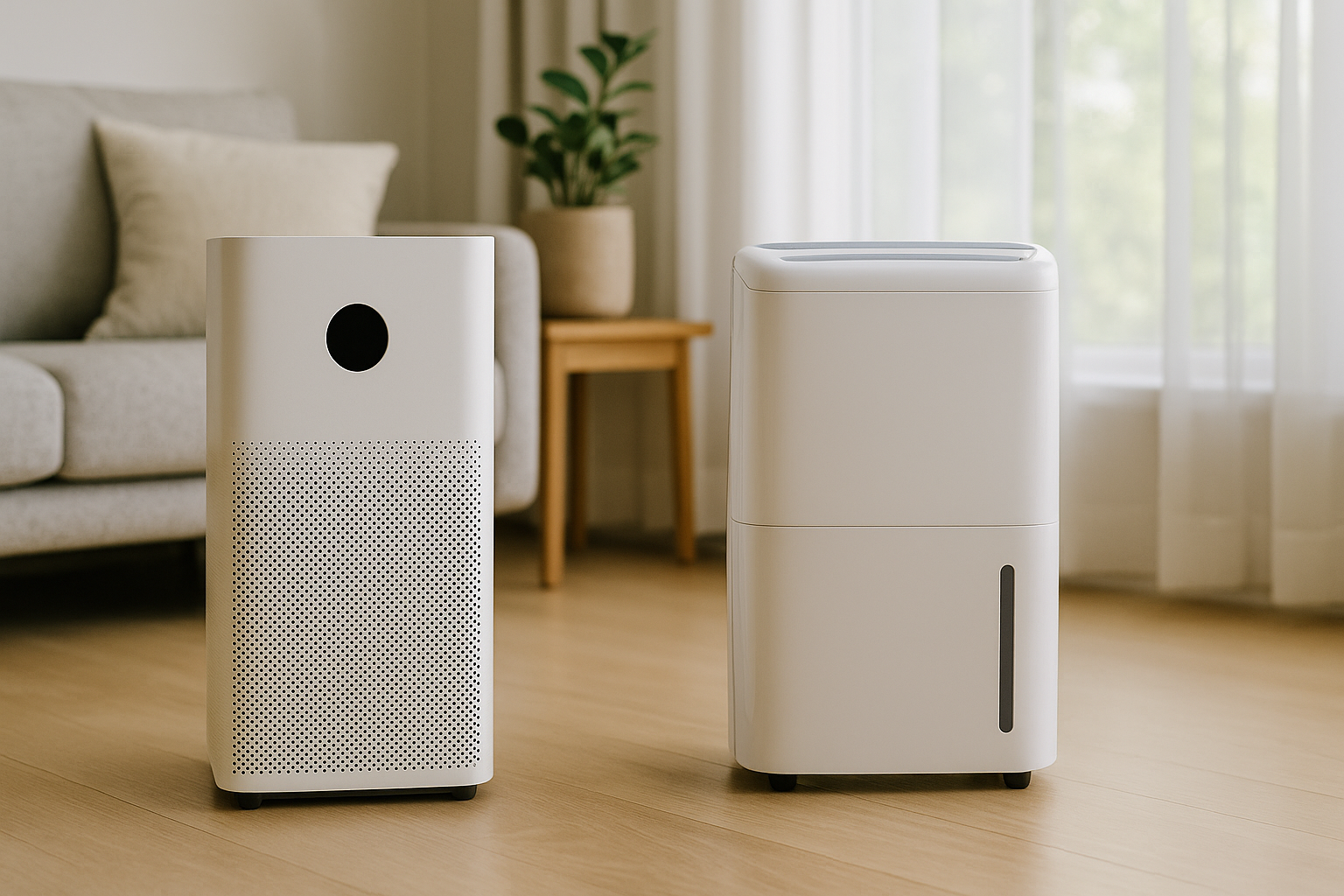
What Is an Air Purifier and How Does It Work?
An air purifier pulls room air through a series of filters, traps the bad stuff, and pushes clean air back out. Simple concept, serious results. Most quality units use a HEPA filter — High Efficiency Particulate Air — which captures 99.97% of particles as small as 0.3 microns. That includes dust, pollen, pet dander, mold spores, and smoke particles.
Many purifiers layer in additional filtration. An activated carbon filter handles odors and volatile organic compounds (VOCs) — the chemical off-gassing from paint, furniture, and cleaning products. Some add UV-C light or ionizers, though the evidence on those extras is mixed. Stick to HEPA + carbon and you've covered the bases.
The purifier runs continuously, cycling the air in a room multiple times per hour. That number — the CADR rating (Clean Air Delivery Rate) — tells you how much filtered air the unit produces per minute. A CADR of 200+ is solid for a medium-sized room. Anything under 100 and you're basically running a fan with a marketing label on it.
Air purifiers do not remove humidity. They do not fix moisture problems. They clean the air that's already there.
What Is a Dehumidifier and How Does It Work?
A dehumidifier pulls excess moisture out of the air. It works by drawing humid air over cold coils, condensing the water vapor into liquid, and collecting it in a reservoir or draining it out through a hose. The now-drier air gets reheated and released back into the room.
The result: lower relative humidity. You want indoor humidity between 30% and 50%. Below 30% and you get dry skin, cracked wood, and respiratory irritation. Above 60% and you've created a paradise for mold, dust mites, and bacteria.
Dehumidifiers are rated by how many pints of moisture they remove per day. A 30-pint unit suits a mildly damp 500–1,500 sq ft space. A 50-pint unit handles larger areas or more severe dampness. For a seriously wet basement, you might need a 70-pint model.
What a dehumidifier does NOT do: filter airborne particles, remove pollen, trap pet dander, or improve air quality in any direct way. It changes the environment so that certain pollutants (mold, mites) have a harder time surviving. That's the distinction most people miss.
Air Purifier vs Dehumidifier: Core Differences at a Glance
| Feature | Air Purifier | Dehumidifier |
|---|---|---|
| Removes particles | ✅ Yes | ❌ No |
| Removes odors | ✅ (with carbon filter) | Partially |
| Reduces humidity | ❌ No | ✅ Yes |
| Kills mold at root | ❌ No | ✅ Yes (removes conditions) |
| Helps with allergies | ✅ Strong | ✅ Moderate |
| Best for | Dust, pollen, smoke, dander | Dampness, mold risk, musty smells |
| Typical noise level | Low–Medium | Medium–High |
| Power usage | Low (30–100W) | Higher (300–700W) |
The core split: air purifiers fix what's floating in the air, dehumidifiers fix the conditions that create the problem in the first place.
Which One Actually Improves Air Quality?
Both do — just through completely different mechanisms.
An air purifier gives you immediate, measurable improvements to particle count in the air. You can actually test this with a $50 air quality monitor like the Temtop M10 or IQAir AirVisual Pro. Run a purifier for an hour and watch the numbers drop.
A dehumidifier improves air quality more indirectly. Lower humidity means mold can't colonize your walls, dust mites can't thrive in your mattress, and musty smells clear up. It's preventive. You won't see instant results on an air quality monitor, but over weeks, you'll notice fewer spores in the air because there are fewer places for mold to grow.
If your house smells musty after rain or your basement windows drip condensation in summer — dehumidifier first. If you're sneezing during pollen season or your dog sleeps on the couch — air purifier first.
Health Benefits: Air Purifier vs Dehumidifier
Air Purifier Health Benefits
- Reduces airborne allergens: pollen, pet dander, dust mite debris
- Captures smoke particles, including wildfire smoke and cigarette smoke
- Filters mold spores already floating in the air
- Removes VOCs (if carbon filter included) — linked to headaches and long-term respiratory issues
- Can reduce frequency of asthma attacks in controlled environments
Dehumidifier Health Benefits
- Stops mold growth before it starts by keeping humidity below 50%
- Reduces dust mite populations — they can't survive in humidity below 50%
- Eases breathing for people with COPD and humidity-triggered asthma
- Reduces that heavy, stuffy feeling in rooms during summer
- Prevents structural mold that can cause serious long-term health issues
Neither device replaces proper ventilation or professional mold remediation if you already have a visible mold problem. If you're seeing black spots on walls, call a professional — no appliance fixes an active mold infestation.
Best Use Cases for an Air Purifier
Buy an air purifier if:
- You have pets and notice pet hair or odor buildup
- You live in a high-pollen area and suffer seasonal allergies
- Someone in your home smokes, or you live near wildfire-prone regions
- Your home has new furniture or fresh paint releasing chemical odors
- You're in a city with high outdoor pollution that creeps indoors
- You have a baby or elderly person with sensitive respiratory systems
The Coway AP-1512HH (around $100) is one of the best entry-level HEPA purifiers on the market — consistently top-rated, real-world effective, and affordable to run. For larger rooms, the Winix 5500-2 (~$180) handles up to 360 sq ft well. For serious air quality concerns, the IQAir HealthPro Plus (~$900) is medical-grade and used in hospitals.
Best Use Cases for a Dehumidifier
Buy a dehumidifier if:
- Your basement feels damp or smells musty year-round
- You see condensation on windows regularly in summer
- You live in a humid climate (Southeast US, Pacific Northwest in winter, coastal regions)
- You've had mold appear on walls, ceilings, or grout before
- Your home exceeds 60% relative humidity (check with a hygrometer — they cost $10)
- Your wood floors or furniture are warping
For most basements, the Frigidaire FFAD5033W1 (50-pint, ~$230) is a reliable, widely available choice. The hOmeLabs 4,500 Sq. Ft Dehumidifier (~$200) is a solid mid-range pick. For serious waterproofing situations or very large spaces, the Aprilaire 1850 is a whole-home unit installed inline with your HVAC — roughly $1,200 installed.
Can an Air Purifier or Dehumidifier Help With Allergies and Asthma?
Short answer: both help, but in different ways, and for different triggers.
When comparing an air purifier vs dehumidifier for allergies, the purifier wins for immediate symptom relief. It physically removes the particles that trigger reactions — pollen, dander, spores — from the air you're breathing right now. HEPA filtration has solid clinical backing for reducing allergy symptoms.
A dehumidifier is the better tool if your allergy triggers are mold spores or dust mites specifically. Both organisms depend on humidity to survive. Drop your indoor humidity to 45%, and dust mite populations collapse within weeks. That's fewer allergens produced at the source, not just captured after the fact.
For asthma, the picture is similar. Smoke, dander, and chemical irritants respond to purifiers. Humidity-triggered asthma and mold-related flare-ups respond to dehumidifiers. If someone in your home has diagnosed asthma, talk to their allergist — many recommend both devices working together.
Cost Comparison: Purchase Price, Running Costs, and Maintenance
Air Purifiers
- Purchase: $80 (budget) to $900+ (medical grade)
- Electricity: 30–100 watts, roughly $3–$10/month on continuous use
- Filter replacement: HEPA filters run $20–$60 and last 6–12 months; carbon filters are similar. Budget $80–$150/year in filters.
Dehumidifiers
- Purchase: $150 (small, 22-pint) to $300+ (50-pint, whole-home units much more)
- Electricity: 300–700 watts — significantly higher draw. A 50-pint unit running 12 hours/day costs roughly $15–$25/month depending on your electricity rate
- Maintenance: Empty the reservoir daily (or hook up a drain hose), clean the coils and filter periodically. No major consumable costs, but energy is the ongoing expense.
Bottom line on cost: Air purifiers are cheaper to run but require filter purchases. Dehumidifiers cost more to power but have fewer consumables. Over three years, both devices run around $400–$600 total cost of ownership in the mid-range tier.
Do You Need Both an Air Purifier and a Dehumidifier?
Honestly? Many homes benefit from both — but not every room needs both.
Think of it this way: a dehumidifier handles the basement and any damp zones. An air purifier handles the bedroom and living areas where you spend most of your time breathing. That's the setup that covers all the bases without overlap.
The devices don't compete. They work on completely different problems. Running both together in the same room isn't overkill if you have humidity AND particle problems — a damp basement bedroom with a dog, for example.
If budget is tight, prioritize based on your primary complaint. Musty smell + visible moisture = dehumidifier first. Sneezing + pet dander + smoke = purifier first.
How to Choose the Right Device for Your Home
Ask yourself these three questions:
- Is my indoor humidity above 55% regularly? Get a $10 hygrometer (Govee or ThermoPro are reliable) and check. If yes, dehumidifier.
- Do I have allergy or asthma symptoms indoors that aren't humidity-related? Pollen, dander, smoke — air purifier.
- Do I have a musty smell, past mold issues, or a damp basement? Dehumidifier first, then consider an air purifier once humidity is controlled.
If you answered yes to questions 1 and 2 — get both. Place the dehumidifier in the damp area, the purifier in your bedroom.
Our Top Picks: Best Air Purifiers and Dehumidifiers to Buy Right Now
Best Air Purifiers
- Coway AP-1512HH (~$100): Best budget HEPA purifier. Covers up to 360 sq ft, auto mode, long-lasting filters. Hard to beat for a single bedroom.
- Winix 5500-2 (~$180): Better for living rooms, adds PlasmaWave technology, washable pre-filter saves on costs.
- Levoit Core 400S (~$200): Smart home compatible, quiet, strong CADR for the price.
- IQAir HealthPro Plus (~$900): Medical-grade HyperHEPA filtration, used in clinics. Worth it if someone in your home has serious respiratory disease.
Best Dehumidifiers
- hOmeLabs 4,500 Sq. Ft Dehumidifier (~$200): Reliable, easy to empty, auto-shutoff. Good for large spaces.
- Frigidaire FFAD5033W1 (~$230): 50-pint workhorse with continuous drain option. One of the most consistent performers for basement use.
- Midea 1,500 Sq. Ft Dehumidifier (~$170): Compact, Energy Star certified, good for bedrooms or smaller damp rooms.
- Aprilaire 1850 (~$1,200 installed): Whole-home solution tied to your HVAC. Worth it if you have a large home with persistent humidity issues.
Start with a hygrometer reading and a week of paying attention to your symptoms. That data tells you more than any spec sheet. Once you know whether moisture or particles are your problem — or both — the right device becomes obvious.